
Engineering & Environmental Knowledge Hub
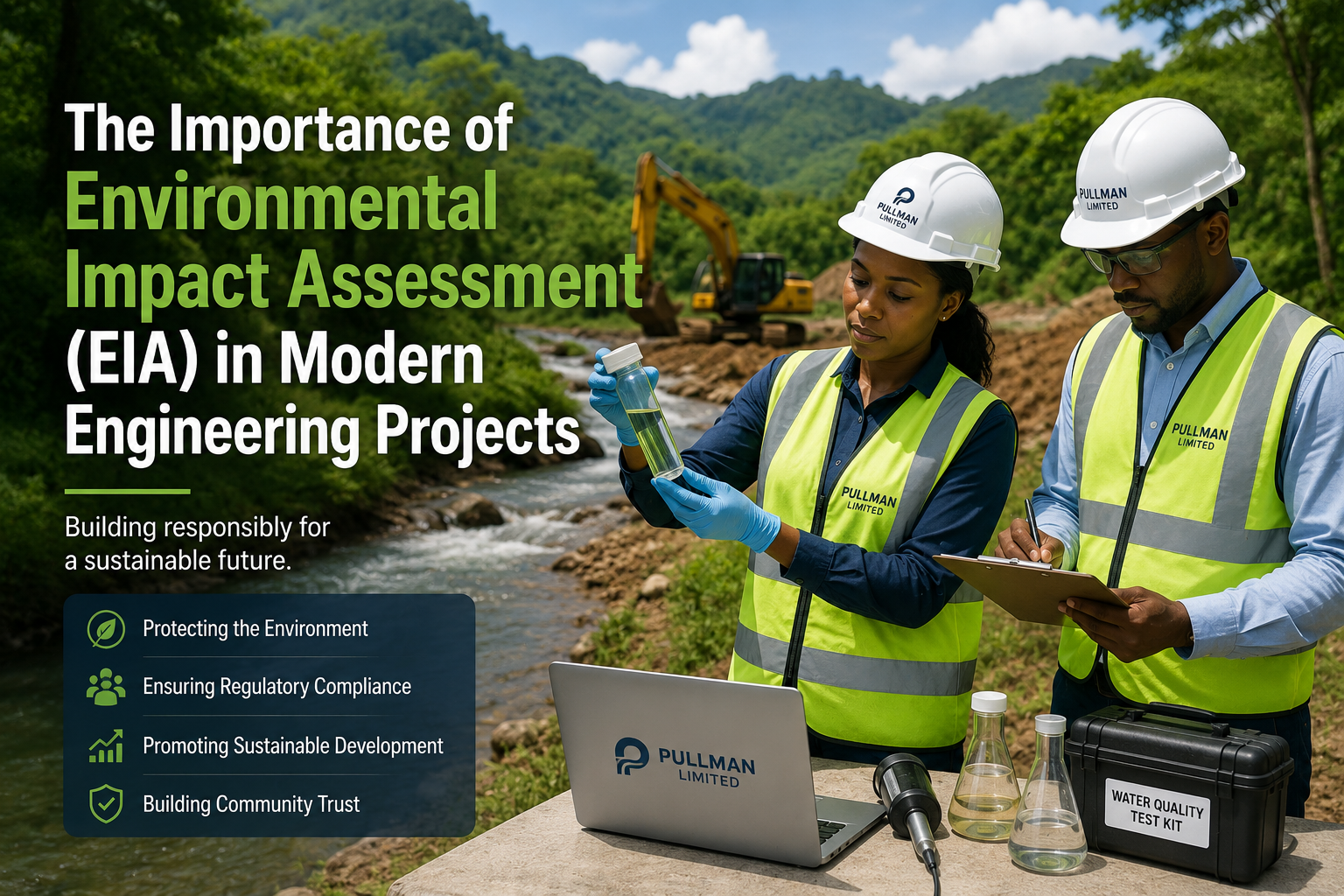
1. The Importance of Environmental Impact Assessment (EIA) in Modern Engineering Projects
In today’s rapidly developing world, infrastructure projects must go beyond construction—they must consider environmental sustainability. One of the most important tools for achieving this balance is the Environmental Impact Assessment (EIA).
What is Environmental Impact Assessment?
Environmental Impact Assessment is a systematic process used to evaluate the potential environmental consequences of a proposed project before it begins. It examines how a project may affect air, water, soil, biodiversity, and surrounding communities.
Why EIA is Important
For engineering firms like PULLMAN LIMITED, EIA is not just a regulatory requirement—it is a foundation for responsible development. It ensures that:
- Environmental risks are identified early
- Legal and regulatory compliance is maintained
- Community health and safety are protected
- Sustainable development practices are implemented
Key Benefits
A well-conducted EIA reduces project delays, avoids environmental penalties, and builds trust between developers and communities. It also helps engineers design projects that work with nature, not against it.
2. Why Accurate Surveying is the Backbone of Every Successful Construction Project
Before any structure is built—whether a road, bridge, or building—the land must be properly understood. This is where surveying becomes critical.
Understanding Surveying
Surveying is the science of measuring land to determine boundaries, elevations, distances, and physical features. It provides the foundational data used by engineers and architects during project design.
Importance in Construction
At PULLMAN LIMITED, surveying ensures that every project starts with accurate and reliable data. Without it, construction projects face risks such as structural misalignment, boundary disputes, and design errors.
- Prevents costly construction mistakes
- Ensures proper land boundary definition
- Improves structural design accuracy
- Supports efficient project planning
Modern Surveying Techniques
Today, surveying is enhanced with advanced technologies such as GPS systems, drones, and Geographic Information Systems (GIS), making data collection faster and more precise.
3. How Technology is Transforming Modern Engineering Consultancy
Engineering consultancy has evolved significantly over the past decades. Traditional methods are now being replaced with advanced digital tools that improve accuracy, speed, and efficiency.
The Role of Technology
Modern engineering firms now rely on tools such as:
- Geographic Information Systems (GIS)
- Drone-based aerial surveying
- 3D modeling and simulation software
- Computer-aided design (CAD)
Benefits of Technological Integration
These technologies allow firms like PULLMAN LIMITED to deliver highly accurate data, reduce human error, and complete projects faster than traditional methods.
Clients benefit from improved project visualization, better planning decisions, and reduced overall project costs.
The Future of Engineering Consultancy
The future of engineering lies in automation, artificial intelligence, and real-time data monitoring. Companies that embrace these innovations will lead the industry in efficiency and sustainability.